Advanced Repair Capabilities for PT6A Components
ATC combines specialized expertise, advanced equipment, and FAA / EASA approved repair processes to restore essential PT6A hot section components to serviceable condition.
ATC combines specialized expertise, advanced equipment, and FAA / EASA approved repair processes to restore essential PT6A hot section components to serviceable condition.
Our team provides advanced in-house repair services for PT6A non-rotating hot section components using internally developed repair processes, precision CNC equipment, and specialized technical expertise, developed through decades of experience.
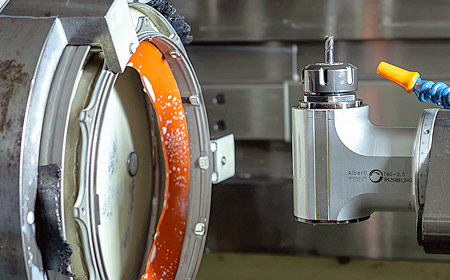
CNC machining capabilities support the restoration of critical dimensions, sealing surfaces, and component geometries across a wide range of PT6A hot-section components. Computer-controlled machining delivers the precision, speed, and consistency required for high-quality, cost-effective aerospace repairs.
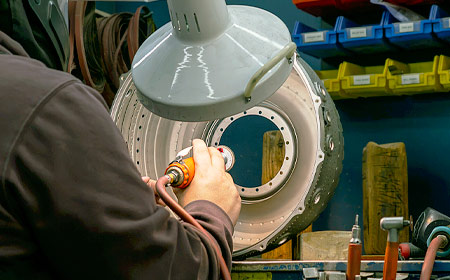
Manual and machine grinding processes support the restoration of critical surfaces, profiles, and component features throughout the repair process. Grinding is used to remove damage, blend repaired areas, prepare surfaces for subsequent operations, and help return components to required dimensional and functional condition.
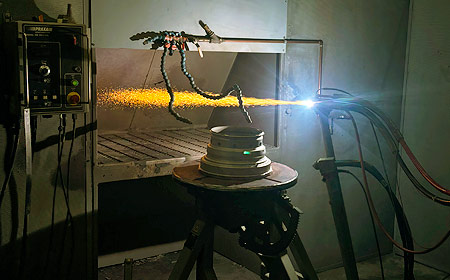
Plasma and wire spray coatings restore critical surfaces and dimensions on components, helping achieve factory-level finishes as part of approved repair procedures.
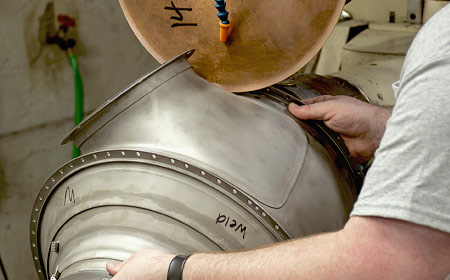
Certified welding processes are used to restore damaged components subjected to extreme temperatures and operating conditions. Our in-house capabilities include precision TIG welding as well as spot, seam, and resistance welding, allowing us to perform complex structural repairs which maintain component integrity and functionality.
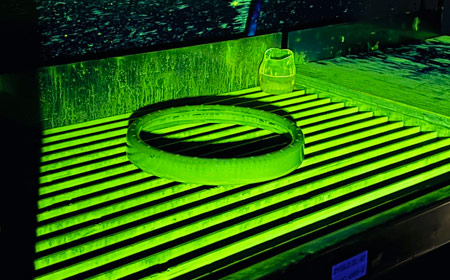
Comprehensive inspection methods help identify cracks, defects, and structural discontinuities without altering the component. Testing is performed throughout the restoration process to verify component condition, support repair decisions, and ensure compliance with industry standards.
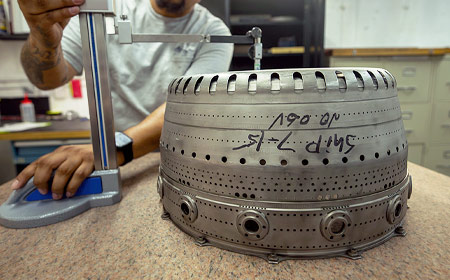
Every repaired component undergoes detailed dimensional verification to ensure conformance with design specifications and repair requirements. Through rigorous inspection and documentation, we confirm repair accuracy, consistency, and readiness for the component’s return to service.
ATC operates as an FAA and EASA certified repair station and maintains documented, quality processes throughout inspection, restoration, and final release.
Available documentation includes:
Which repair capabilities are performed in-house?
ATC’s in-house capabilities include precision CNC machining, grinding and surface restoration, thermal spray coatings, TIG and resistance welding, non-destructive testing, and dimensional inspection. Specific processes depend on the component and repair requirements.
What is non-destructive testing used for?
Non-destructive testing helps identify cracks, defects, and structural discontinuities without altering the component. It can support repair decisions and verify component condition during restoration.
When is thermal spray used?
Thermal spray processes such as plasma and wire spray may be used to restore critical surfaces and dimensions when called for by an approved repair procedure.
How are repaired component dimensions verified?
ATC performs dimensional inspection to confirm repaired features meet applicable design specifications and repair requirements before release.